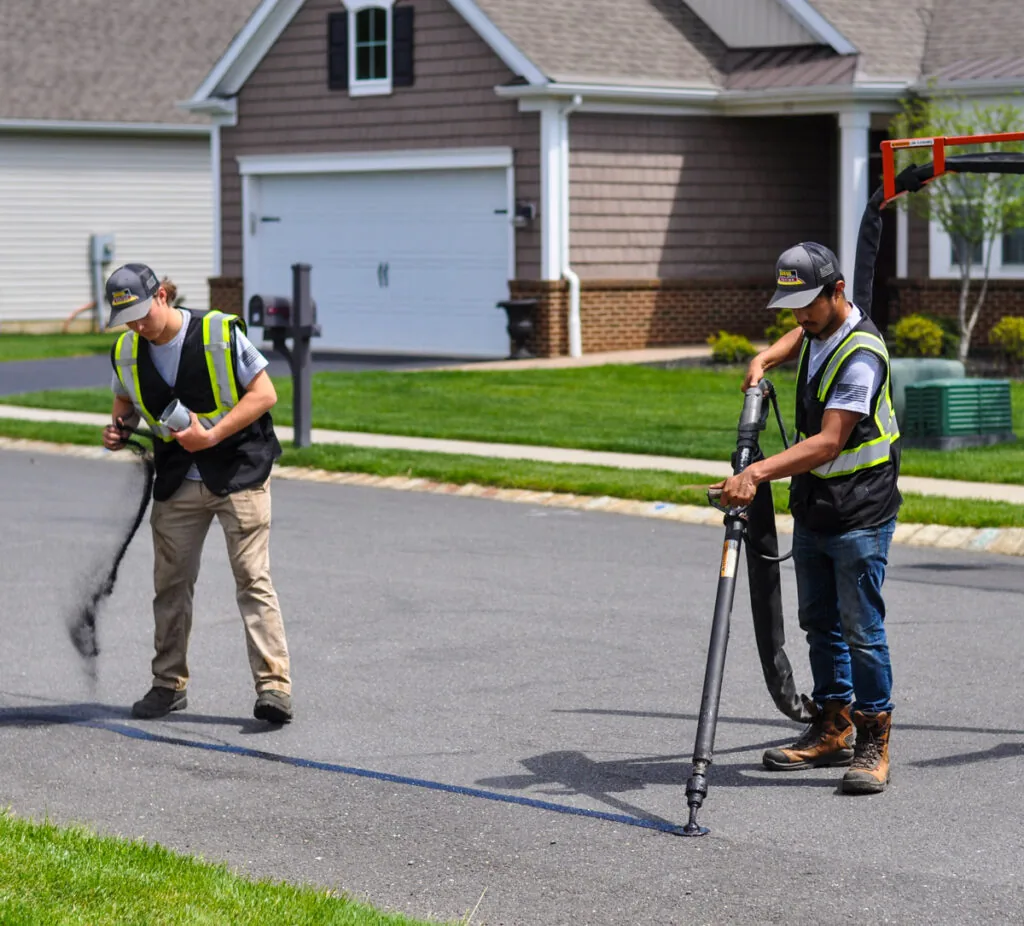
While often used interchangeably, crack filling and crack sealing address different types of pavement cracks. Both methods play an important role in pavement preservation depending on the type of cracking present.
- Crack Filling: Best for non-working cracks that don’t experience significant expansion or contraction. Crack filling is an economical solution that prevents water infiltration and early pavement failure.
- Crack Sealing: Commercial crack sealing is designed for working cracks, which expand and contract with temperature changes. The flexible sealant moves with the pavement, providing a long-term solution.
Common Types of Broken Asphalt
Cracks appear in many forms, each with its own causes and risks. Understanding each type of deterioration helps determine whether crack filling, patching, or a full pavement replacement is necessary. The most common types of asphalt damage include:
- Alligator Cracking: A pattern of interconnected cracks that indicates structural failure. This type of cracking often requires full reconstruction.
- Block Cracking: Large rectangular cracks caused by aging or shrinking asphalt binder.
- Edge Cracking: Found along the outer edges of pavement where water drainage is poor.
Potholes & Rutting: Form when cracks go untreated and water penetrates the base, leading to depressions and holes.